Summary
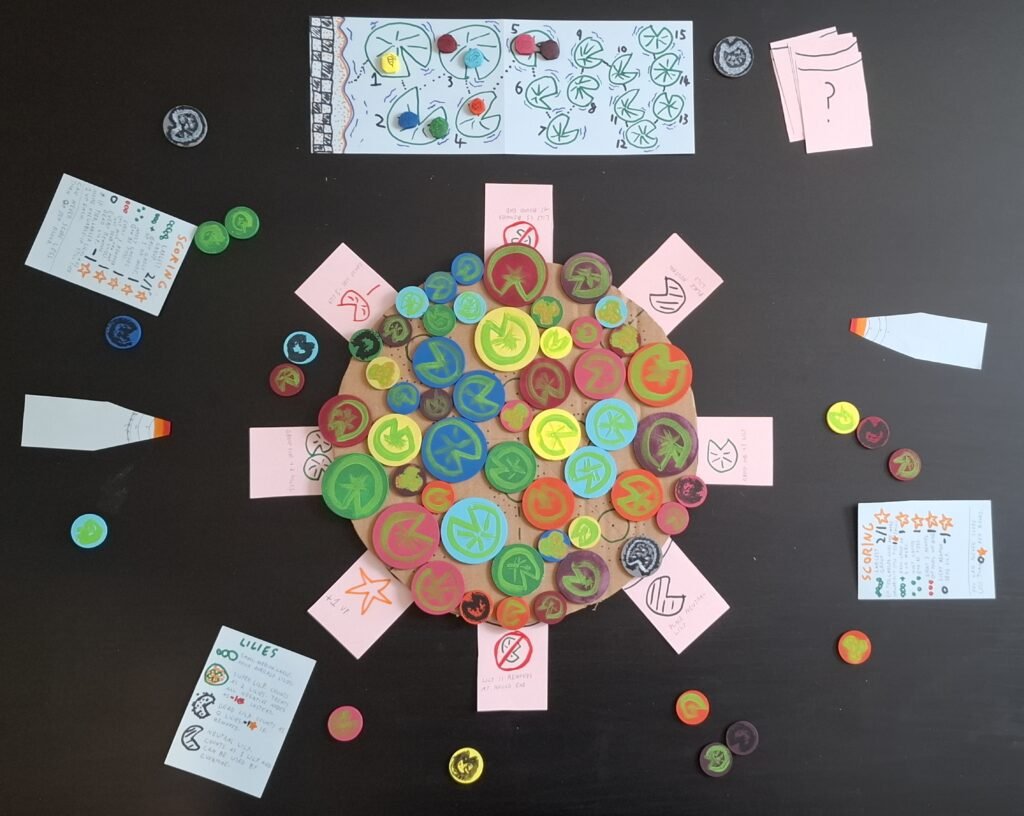
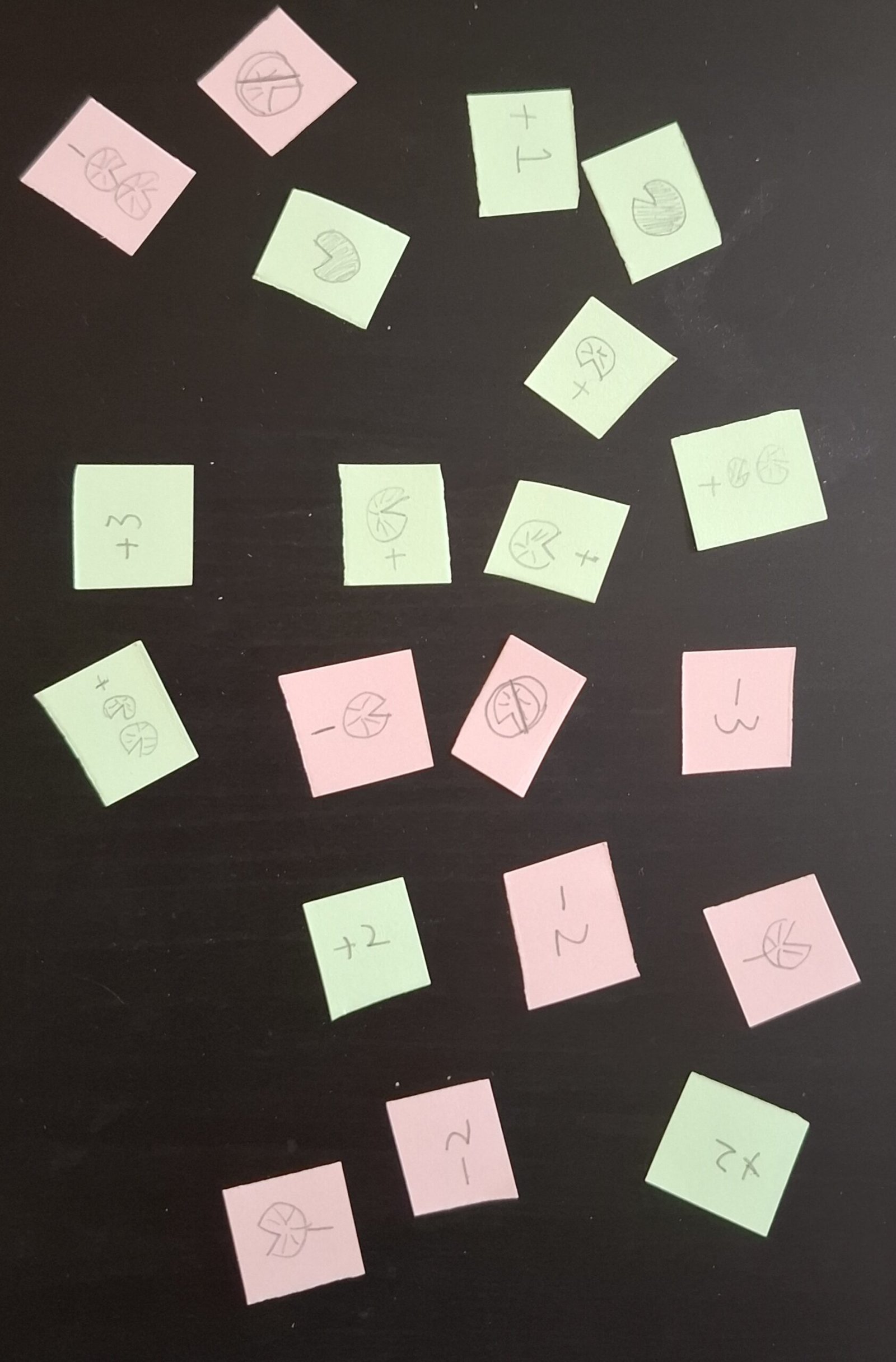
Lily Pad Pond is a spatial family game where players take turns to place lilies onto a pond, with the goal of scoring the most points over several rounds.
Players will need to carefully consider placement, as well as how to push other players’ lilies out of the way, disrupting their efforts to score points.
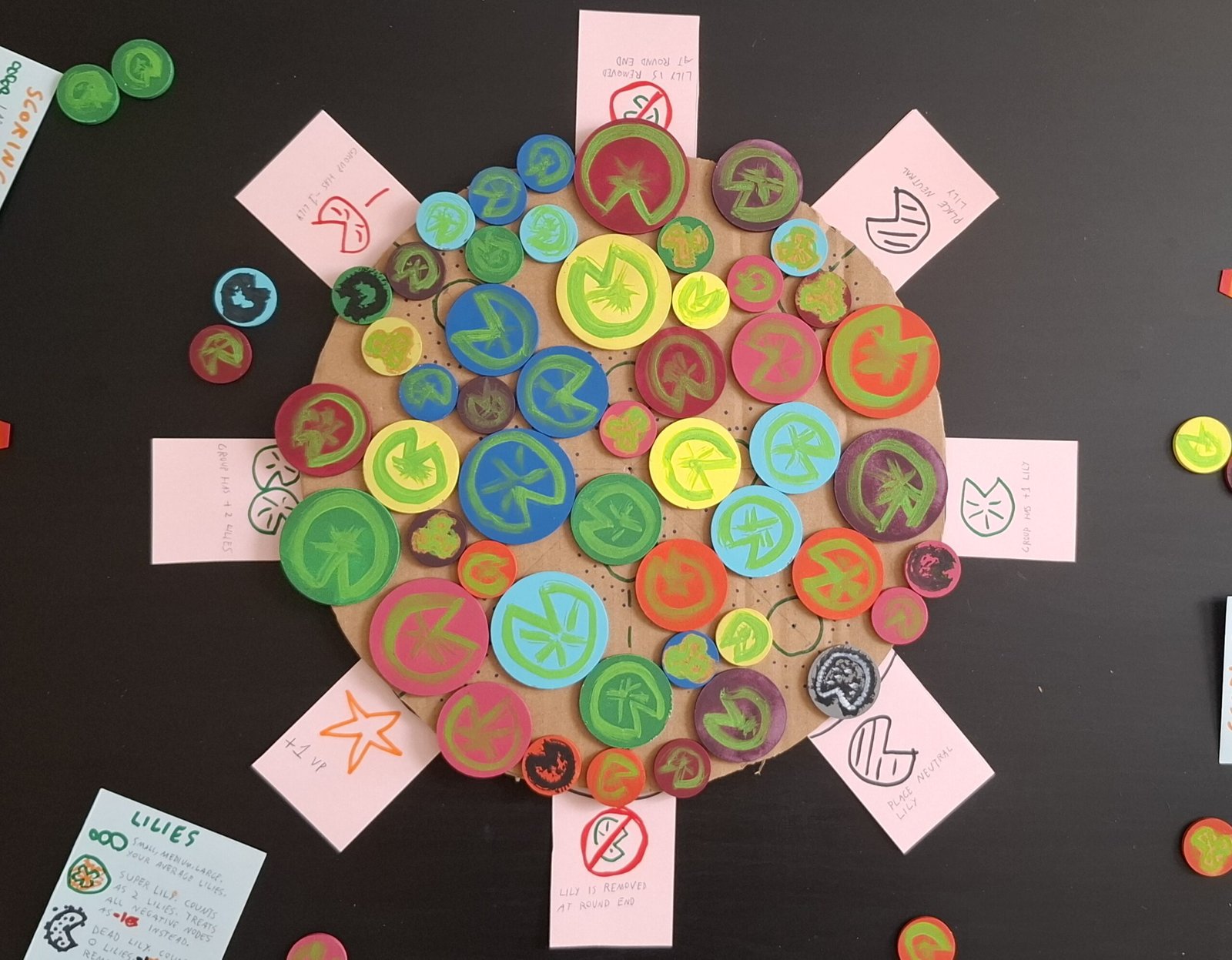
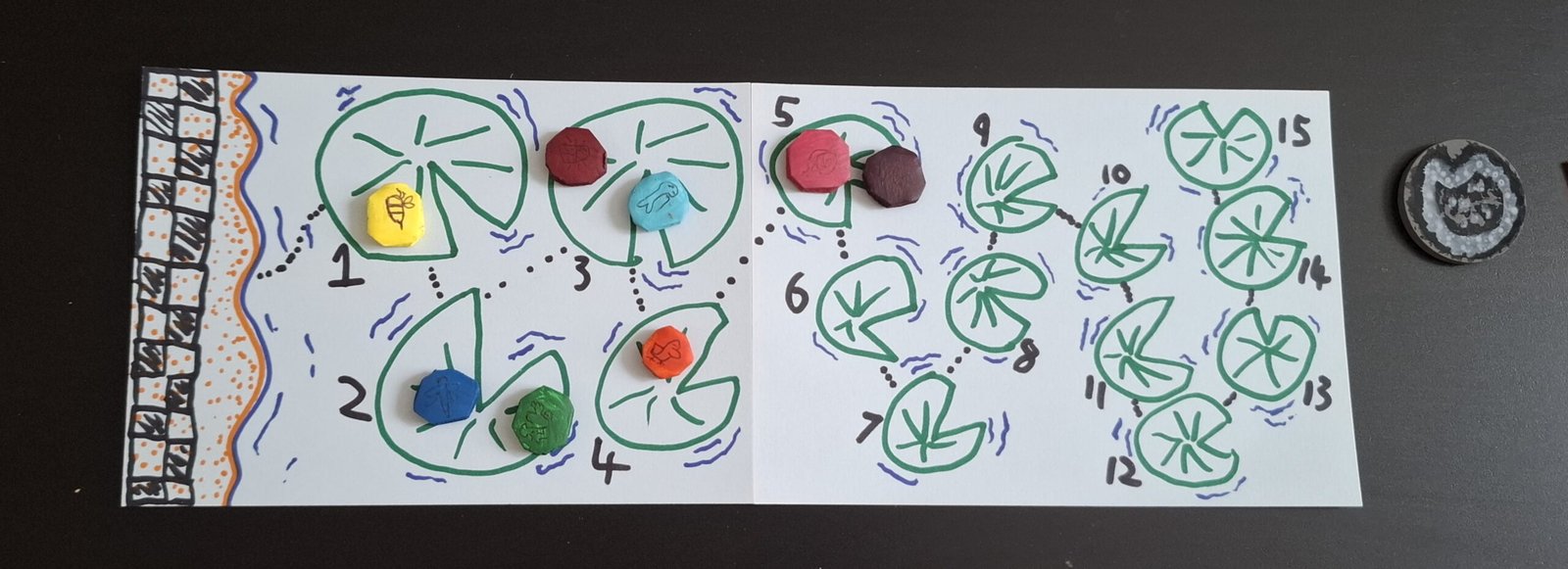
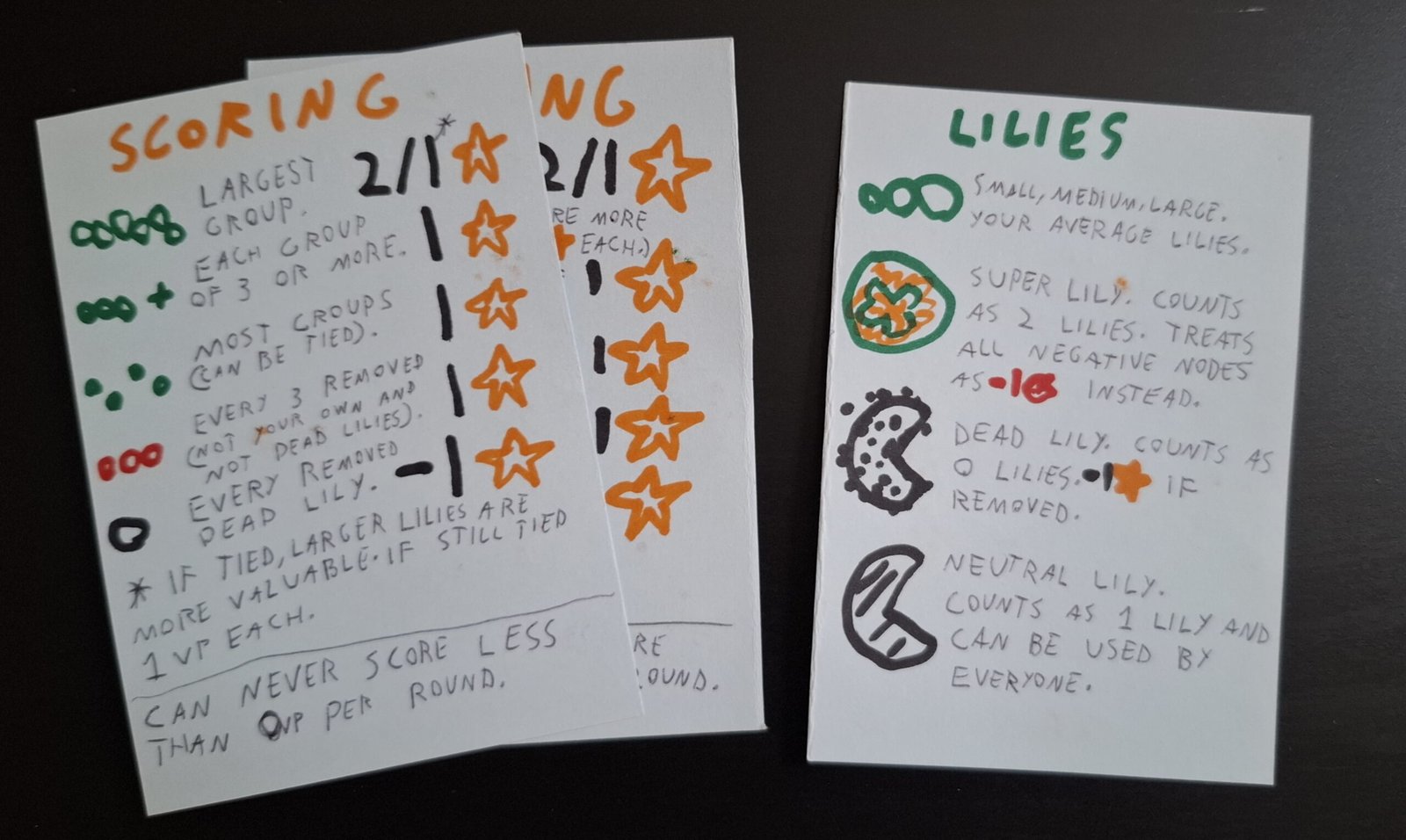
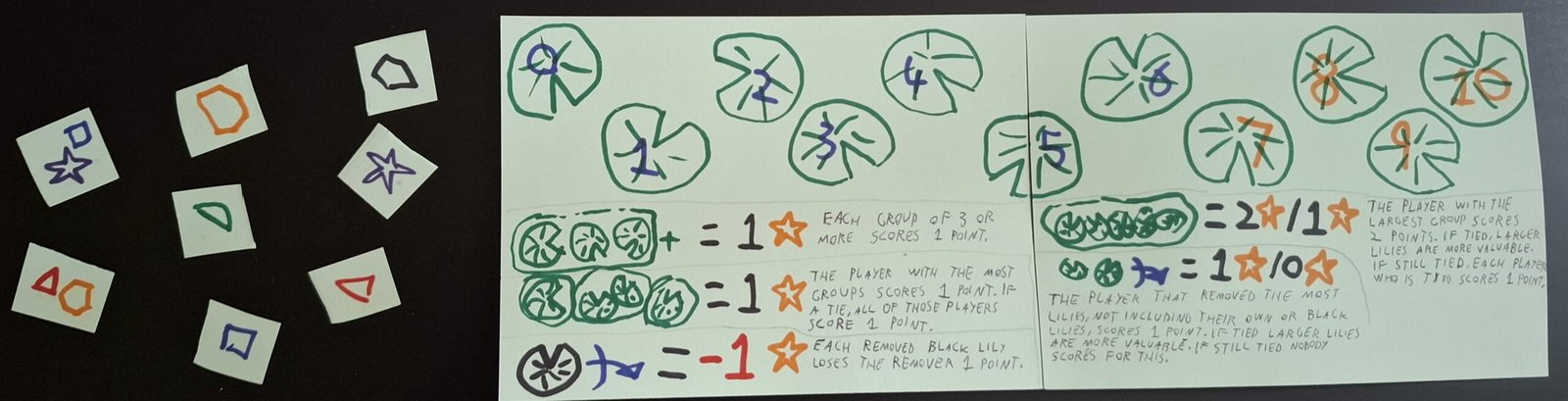
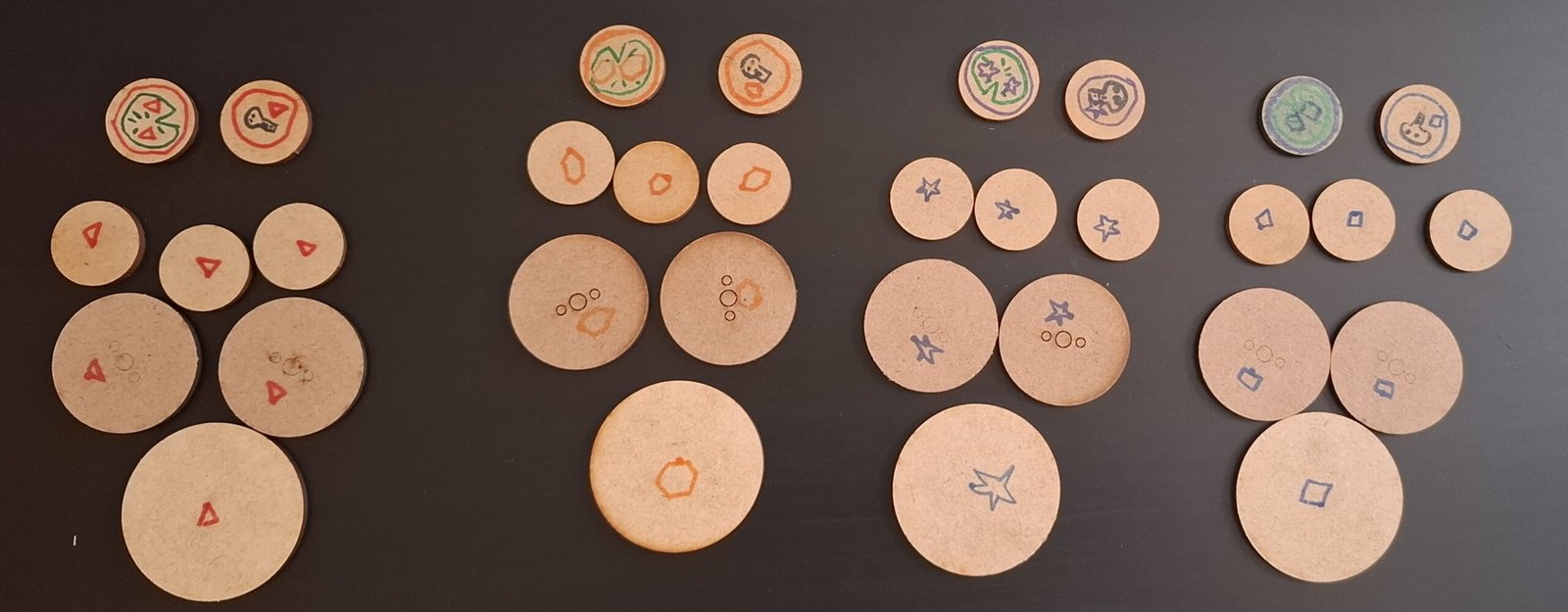
Each player has a selection of lilies: 1 large, 2 medium and 5 small. 2 of those small lilies are special, with one being a super lily which contributes more to scoring and lessens some negative effects., and a dead lily which can cause another player to lose points. Neutral lilies can also be placed at the start of a round, depending on the pond cards that have been drawn.
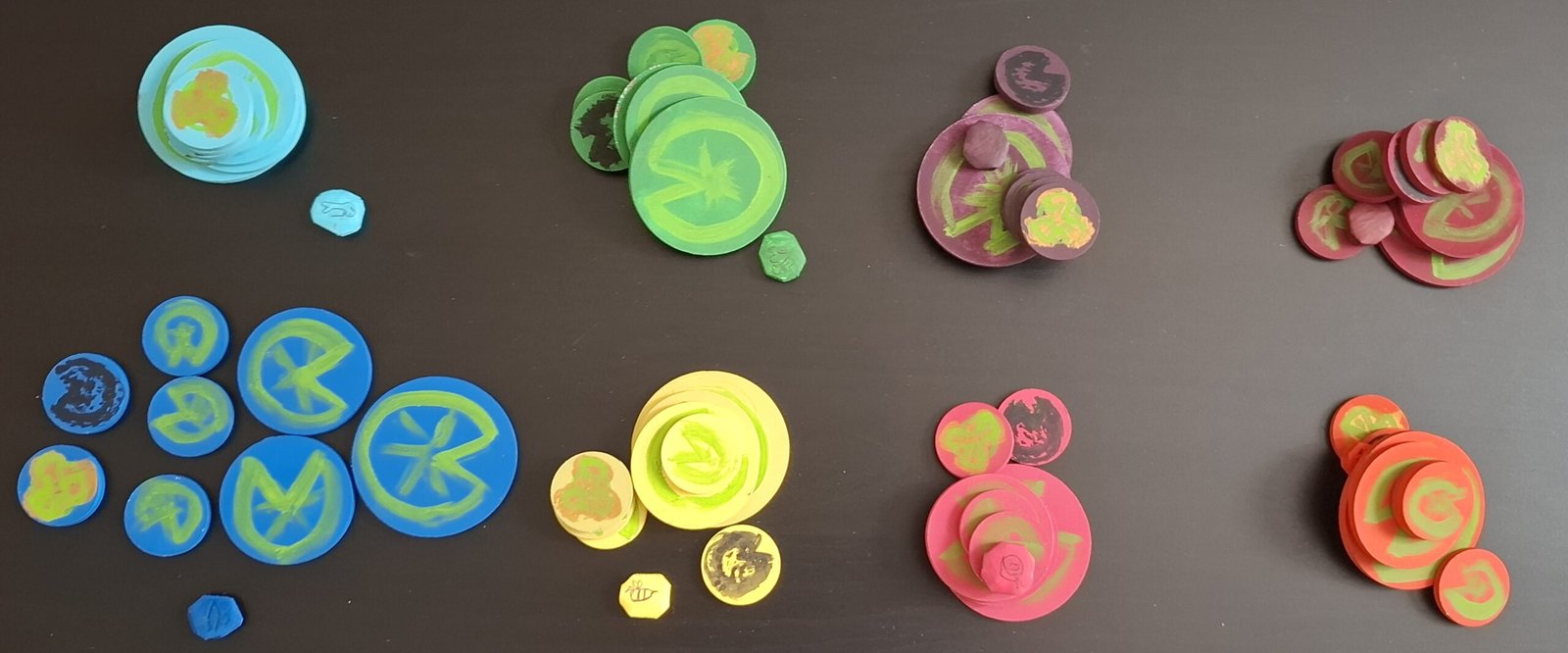
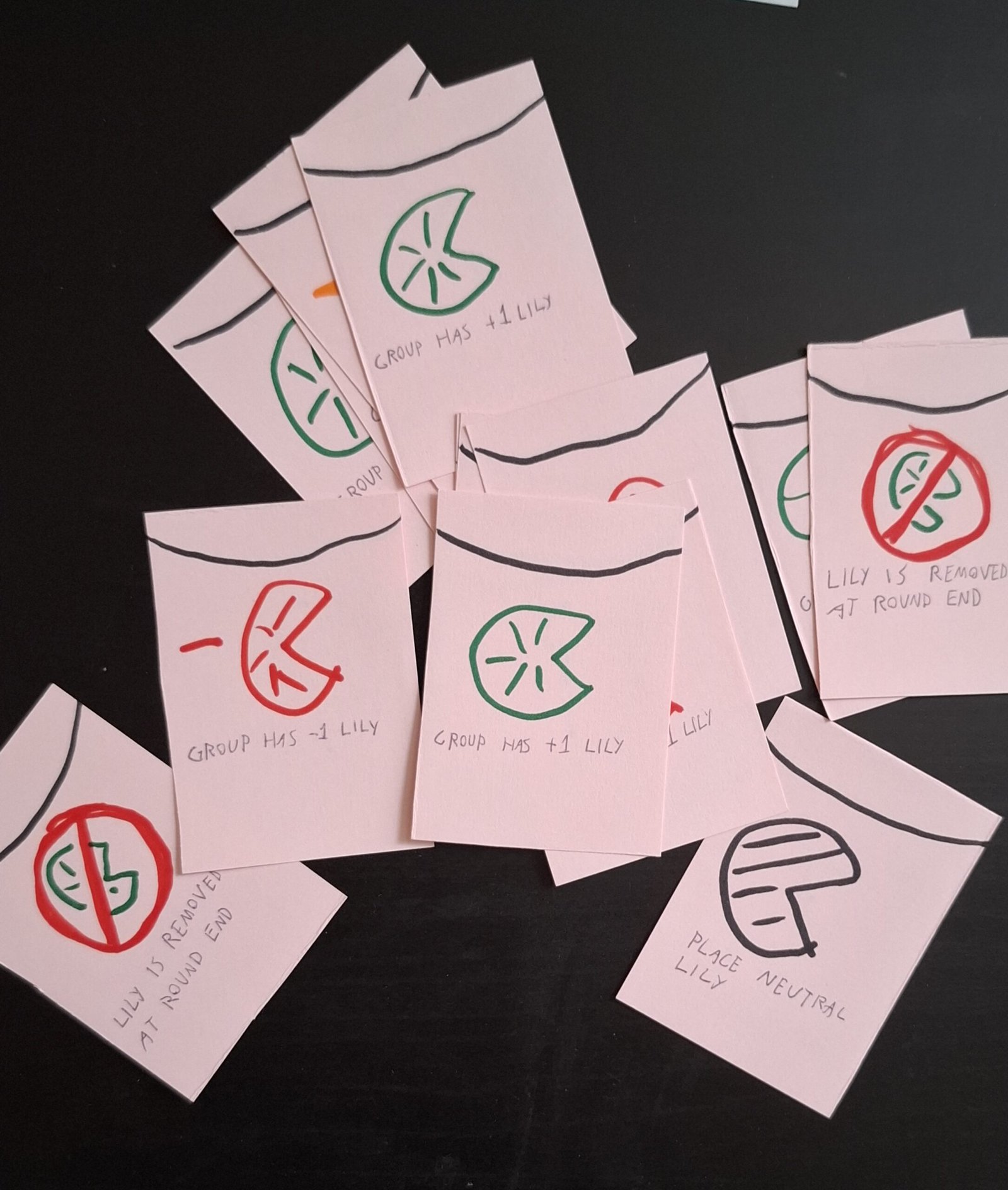
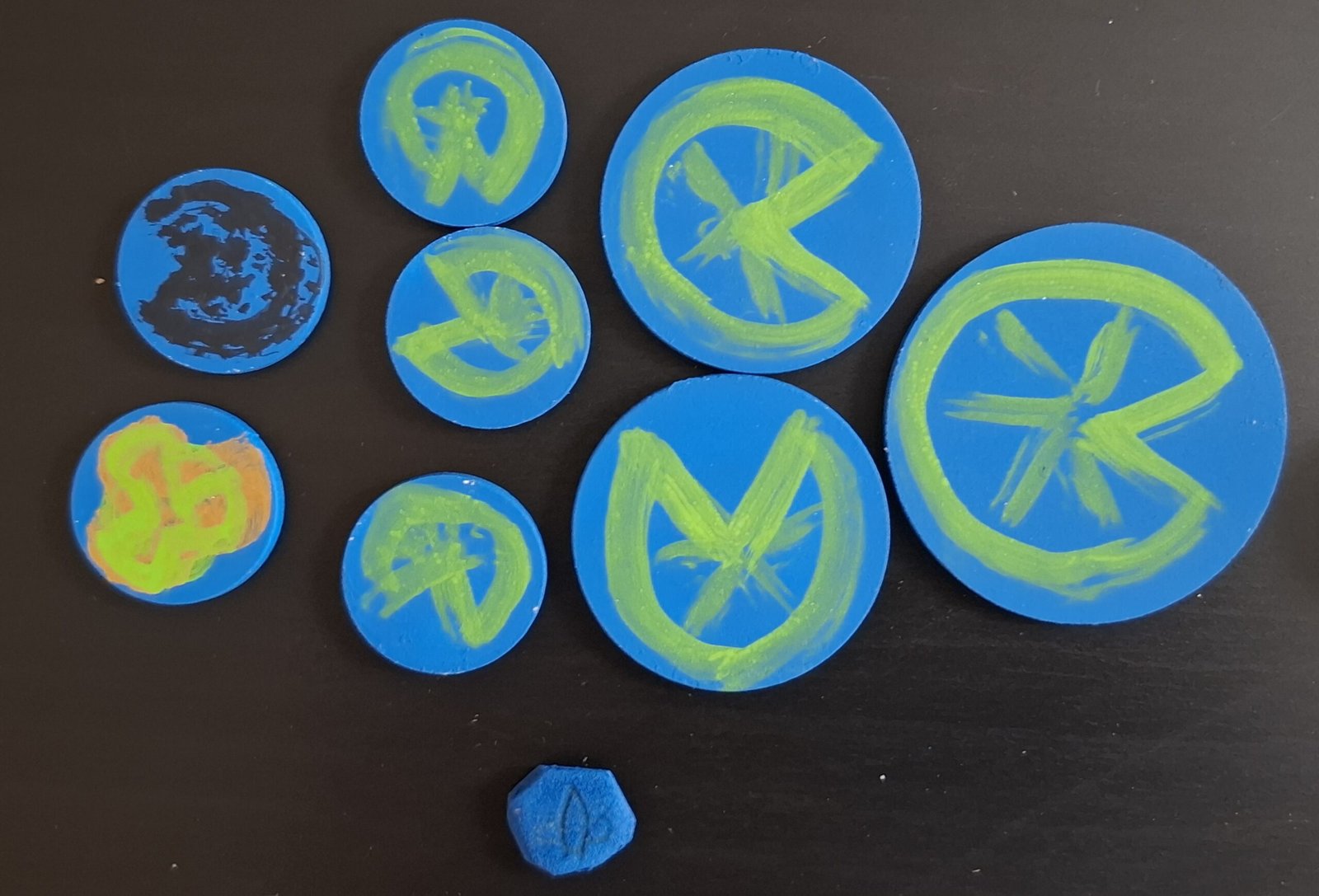
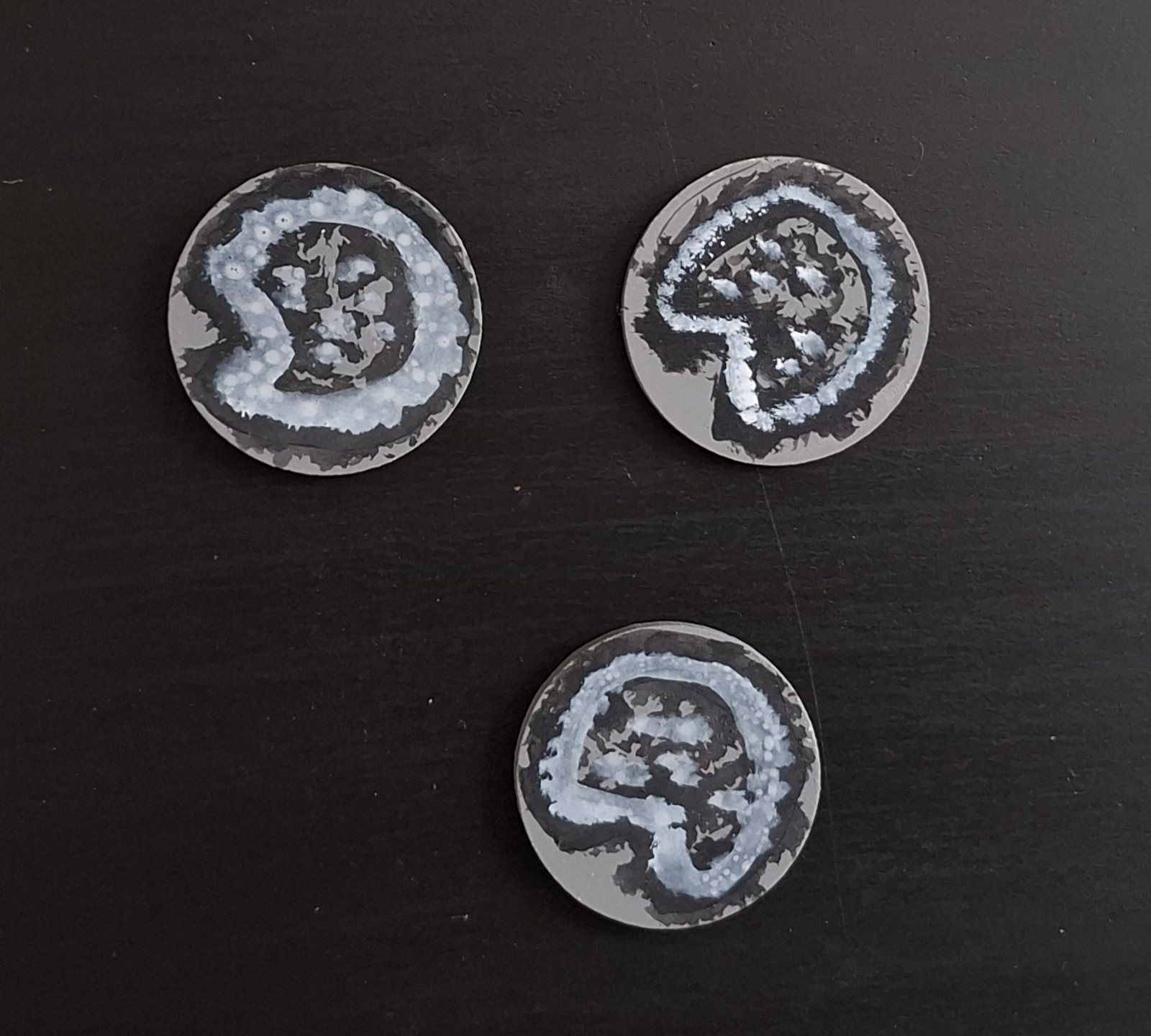
The game was rather successful, playtesters enjoyed it and happily played more rounds. Though I found my group would often cheat by slightly pushing the lilies too far. To counter this I added a tool to help with placement, but this made the placement of lilies more fiddly, and did very little to stop the “over-nudging”.
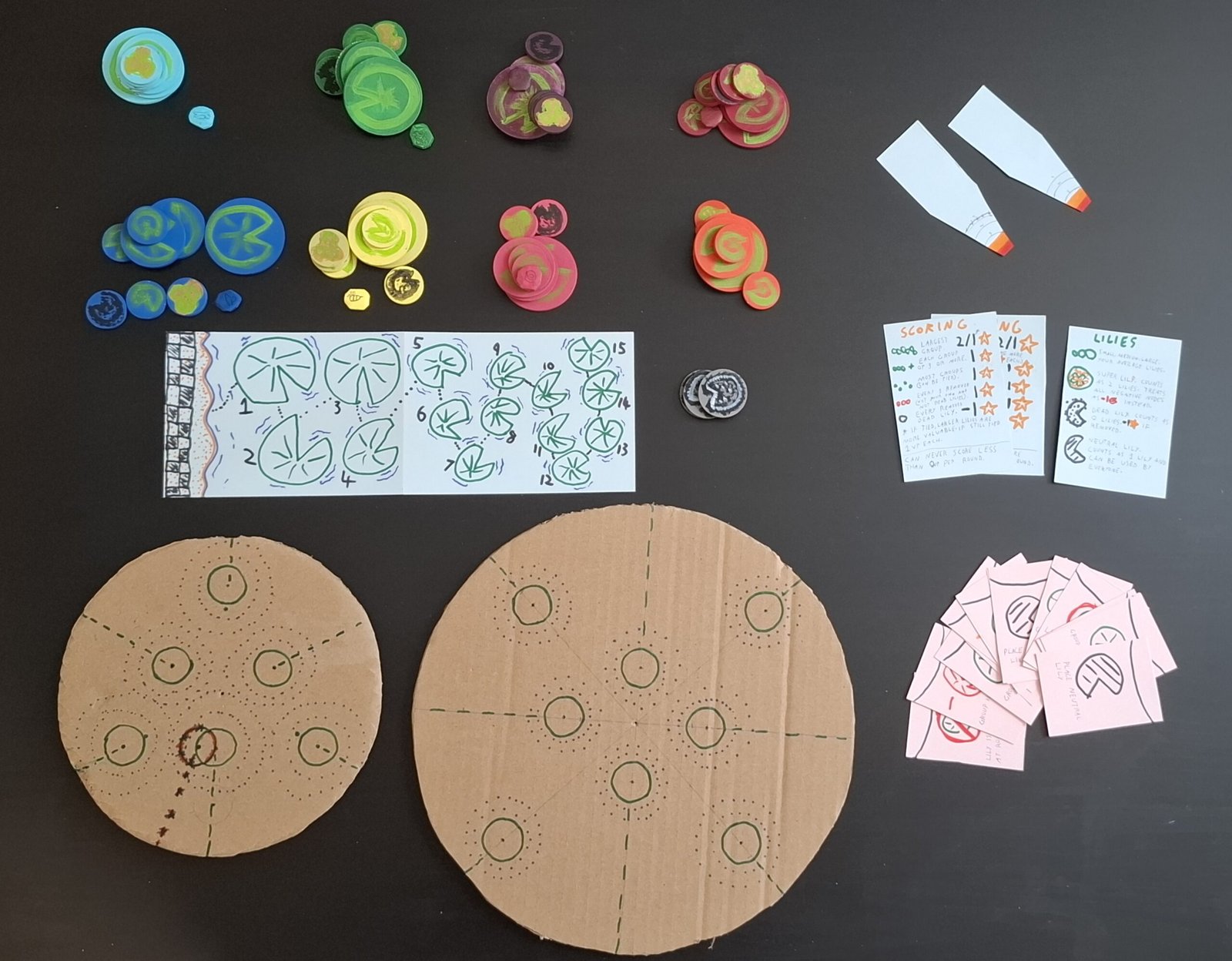
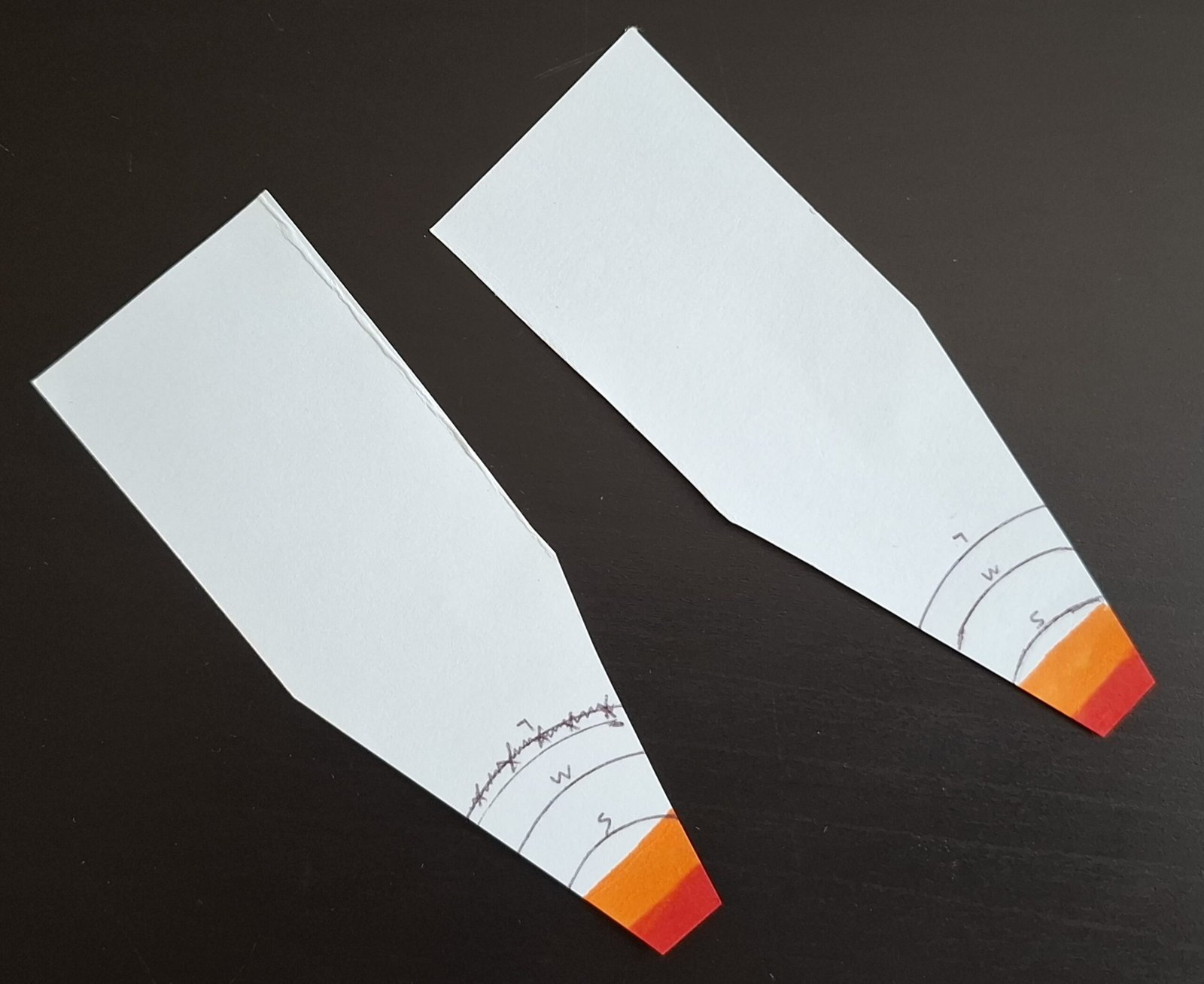
The components are various cards and cardboard, with the Lilies made from MDF discs used for basing miniatures, primed and painted in different colours.
Original Concept
I regularly visit a board game café, and was noticing the lack of 8 player games that weren’t quiz or party games. I wanted something that was quick, had a flexible player count, and plenty of player interaction, but was also a board game.
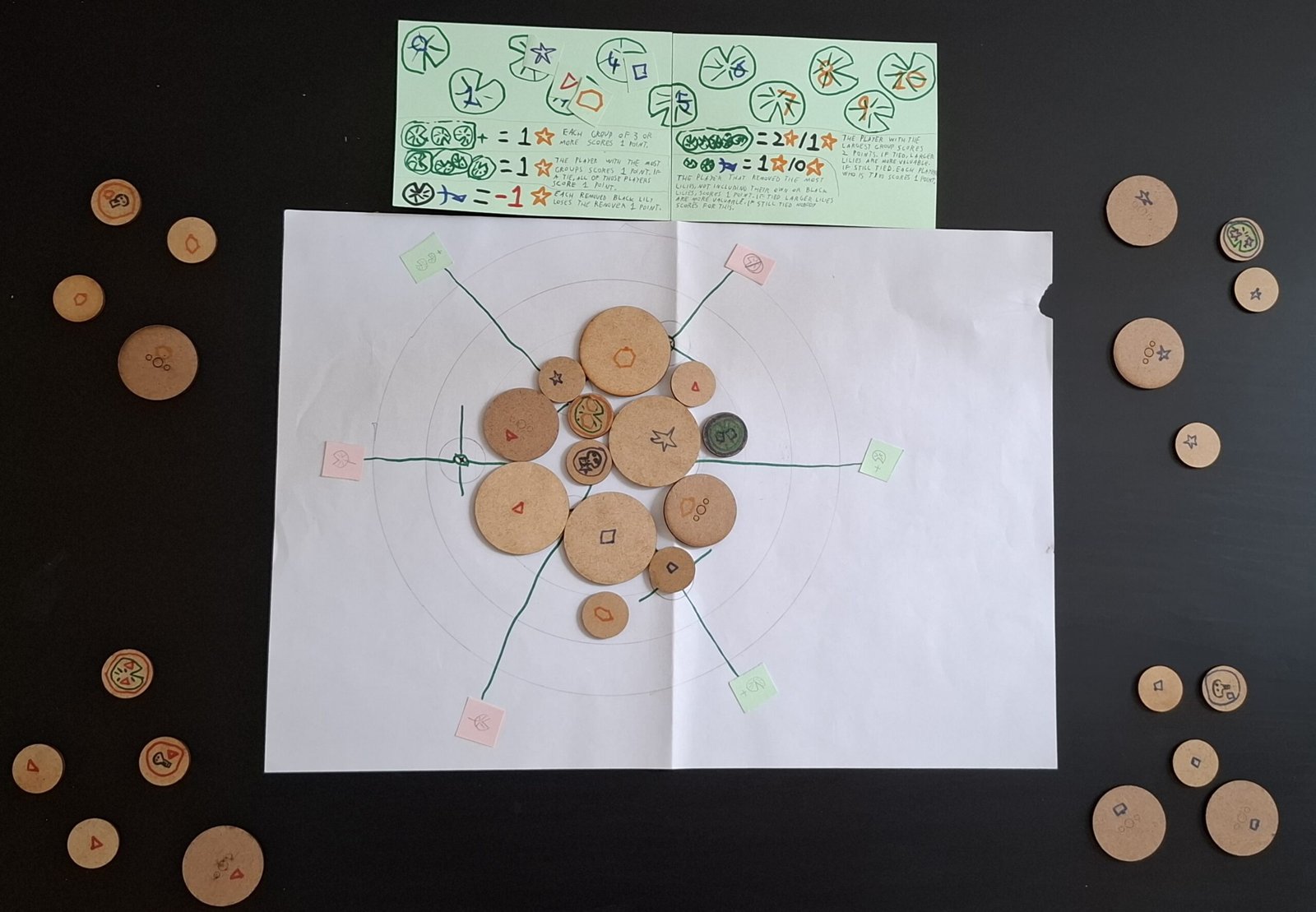
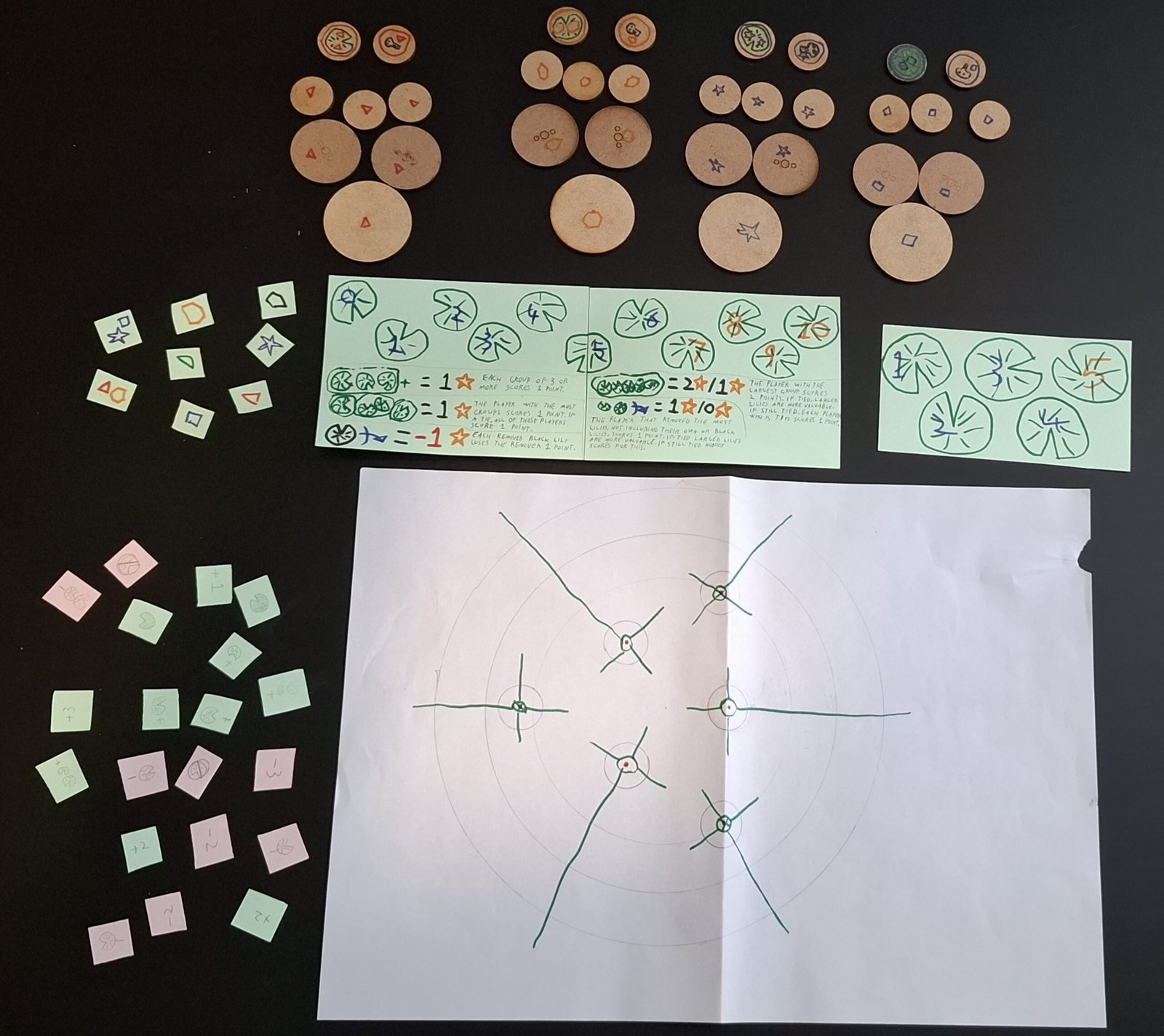
My first draft was fairly simple, made with paper, card and MDF discs. I played through several games on my own and eventually formed the rules around pushing the discs to capture points. I felt the theme of lily pads on a pond was a nice, family friendly aesthetic.
I then tried to appeal to different strategies, playing as 4 very different players, and added multiple scoring conditions such as having the largest group, or even pushing other peoples lilies off the board.
I then took it to the café to be playtested, which highlighted some more issues which I later addressed.
Outcome
I really enjoyed working on this game and would call it a complete design. People enjoyed it and I think it could become a sold product, but for me it wasn’t so thrilling that I’d want to do so. It has its flaws, and it’s not something I’d personally buy for myself, but is more of a family game I could see being a staple in board game clubs or cafés. I’ll definitely keep it as my own game, and happily leave it at that.
I recently encountered a 2-in-1 game with a similar concept called Flora Funga which I enjoyed playing. It has a very similar structure where players will place discs that earn points in a variety of ways, though the rules of the game are otherwise quite different. It reminded me of this one, its good and its flaws.